Key takeaways: FieldDojo took 280 commits to reach the App Store. In the 19 weeks since approval the phone app has taken 418 more, and a desktop app, the website and the API took another 264 between them. About a fifth of the phone work was fixes. Most of the rest was the product growing, and some was upkeep that no app gets to skip. If you're pricing a build, ask what the months after launch look like too.
The Row We Skipped
In August we published a cost teardown of FieldDojo, our jobsite calculator app. It covered the build: first commit on 24 March 2026, App Store approval on 12 July, just under 16 weeks and 280 commits. The last row of that table was maintenance, and all we wrote there was that it's an annuity.
That's true, and not much use to anyone planning a budget. Version 1.5 went out this month, so we went back to the repositories and counted what the app has taken since approval day.
The Count
13 July to 25 November is 19 weeks.
| Repository | Commits since approval | What it is |
|---|---|---|
| Phone app | 418 | The React Native app. It had 280 at approval |
| Desktop app | 131 | New in September, for macOS, Windows and Linux |
| Website | 92 | fielddojo.com: trade guides, web calculators, the shared walkthrough page |
| Backend API | 41 | Accounts, sync and share links |
A commit is a rough unit. Some are one line and some are a week of work, so read these as proportions and nothing finer. Even so, the phone app has had half as many commits again since launch as it took to launch, over about the same number of weeks.
Leaving out merges, the phone app has 398 commits in that period. By kind:
| Kind | Commits | Share |
|---|---|---|
| Features | 147 | 37% |
| Documents: specs, plans, store listing material, the code reference | 117 | 29% |
| Fixes | 88 | 22% |
| Dependencies, releases and build settings | 33 | 8% |
| Refactors, performance, tests | 13 | 3% |
The documents row looks large. It's mostly specs and plans written before a feature gets built, plus the store listing drafts, and we count it as real work because it is.
Where the Features Went
The app changed shape. The largest single piece was Walkthrough, which shipped on 21 October. You sweep a room into a 360° panorama, pin notes and calculations to the walls, and share the whole job as a link. 57 commits carry its name, and it leans on an open-source stitching module that is a project in its own right. At the start of October the phone app was redesigned around projects, which became the home screen. None of it was in the plan for version 1.
More places to run. Tablet layouts for iPad and Android tablets arrived in October. The desktop app had its first commit on 20 September and its first public release on 4 November.
Regions, search and reference. The first weeks after approval went to regional code sets (UK and Canadian versions of the electrical calculators, then an EU region), search across the calculators, and an offline reference library of the code sections behind them.
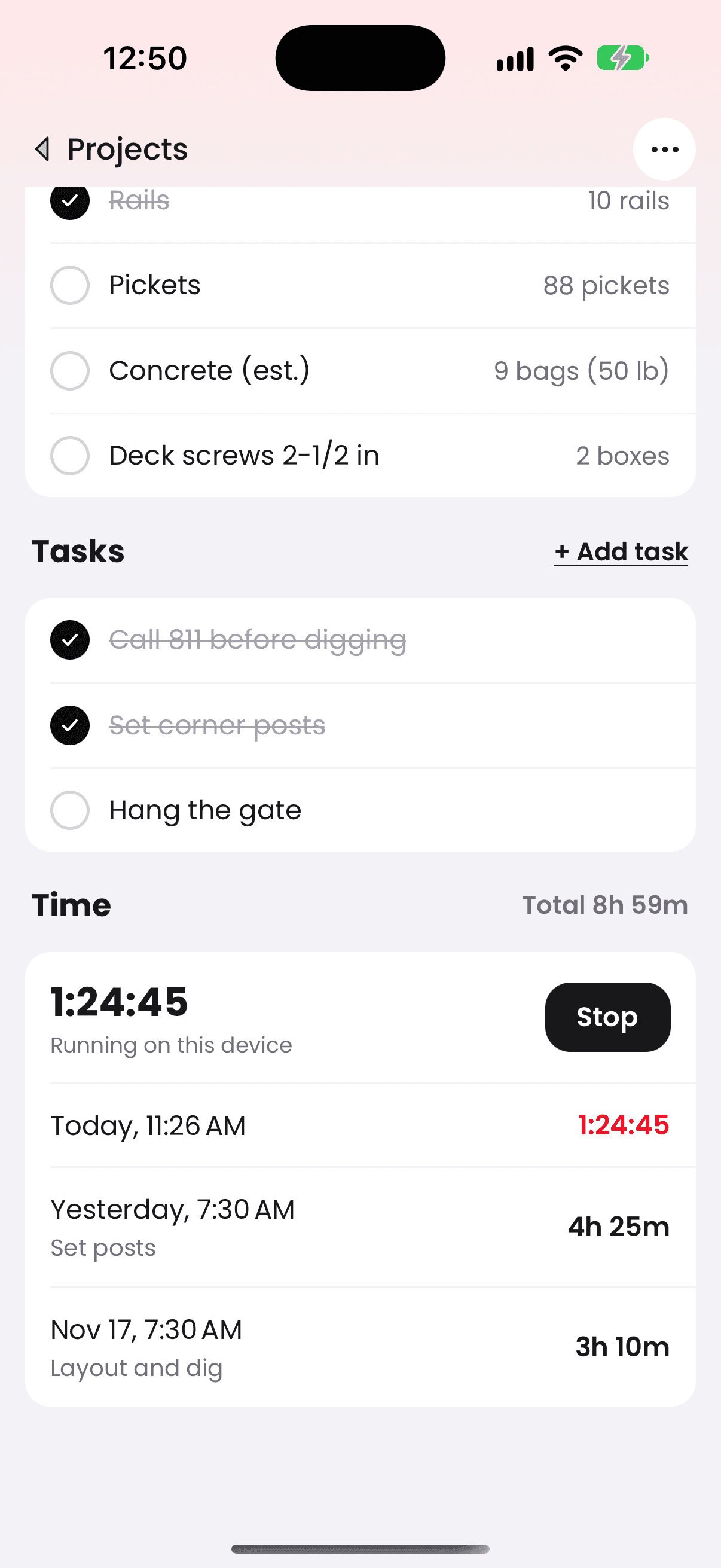
Version 1.5. Eight new calculators, a drawing on every result, 3D models on 25 calculators, and a materials list, task list and job timer on every project.
The Part That Isn't Features
Checking our own numbers. In November we audited every calculator against the code table it cites. The audit found things to fix. A few results were wrong, and in several places an input past the end of a table got an answer with no warning. The fixes shipped in 1.5, results cited to the NEC now say which edition they follow, and the corrected values are pinned by tests against the transcribed pages. The suite stands at 1,465 tests. We said in the teardown that test coverage had lagged the code, and this audit is what catching up cost.
Platform upkeep. FieldDojo launched on Expo SDK 57 and React Native 0.86, and moved to SDK 58 and React Native 0.88 on 1 November. Android purchases were switched on in August. Release builds got code shrinking in November, and since version 1.4 a JavaScript fix can ship over the air without waiting on store review. A user sees none of this, and it can't be put off for long.
The store listing. 24 commits are store material: screenshot sets for phones, 7 and 10 inch Android tablets and the 13 inch iPad, and the listing copy. The store name changed twice in those 19 weeks, most recently to FieldDojo: Jobsite Calculator with 1.5.
Sync. Each new kind of data has to travel between devices, and 1.5 added three: drawings, list items and time entries. The backend's 41 commits are mostly walkthrough storage, sync and sign-in. The offline-first design held up, though it wanted attention every time the data model grew.
What Kept It From Costing More
Some decisions from the original build paid for themselves in this period.
- Calculators are pure functions with their own tests. The eight new ones in 1.5 landed in a single commit on 18 November.
- The API client is generated from the server's OpenAPI spec, so a server change that would break the app fails the type check first.
- The desktop app runs the phone's own files. When 1.5 added calculators, desktop got them by copying a directory.
- Over-the-air updates mean a JavaScript fix doesn't need a store submission.
If You're Budgeting
It helps to split post-launch work into two piles. Growth is yours to pace. Walkthrough, desktop and 3D models were choices, and a product can sit still on that side for a quarter if money is tight. Upkeep and corrections don't wait for you. SDK upgrades, OS releases, store policy changes and the bugs real users find arrive on their own schedule.
For a sense of proportion from this one app, fixes and dependency work together were about 30% of the phone commits after launch. Some of those fixes belong to the new features, so a product that stood still would see less than that. It would not see zero.
We price by milestone, and that carries on after launch. Each release is scoped and priced before it's built, and any milestone can be the last one. If you're collecting quotes, ask each agency what they'd expect the six months after launch to involve for your app. An honest answer has upkeep in it.
You can check the result yourself. FieldDojo is on the App Store and Google Play, and the case study covers what's in it today. If you're planning a build and want this kind of breakdown for your own idea, tell us what you're building.